


Facial piercing - all types
Facial piercing has the strongest impact on everyday functioning of all piercings. Speech, facial expressions, eating and oral hygiene, which is why the selection of starter jewelry is more important here than in the case of the ear or body. The group includes 11 types: nose piercings (nostril, high nostril, septum, bridge), mouth piercings (labret, vertical labret, medusa, monroe, smiley), eyebrows and tongue. Most heal faster than ear cartilage piercings, but require different, more rigorous hygiene - especially in the oral cavity.

Nos (nostril)
Classic nose piercing. The most popular facial piercing. To start, a horseshoe or a simple pin with a cone is used; ring only after healing, because the mobility of the jewelry prolongs the process and increases the risk of scar formation (keloid).

High nostril
A nose piercing made higher than a standard nostril, closer to the bridge of the nose. A less popular, but increasingly chosen variant, often combined with the classic nostril into one composition. Slightly longer healing time than standard nostril due to harder tissue in this area.

Septum
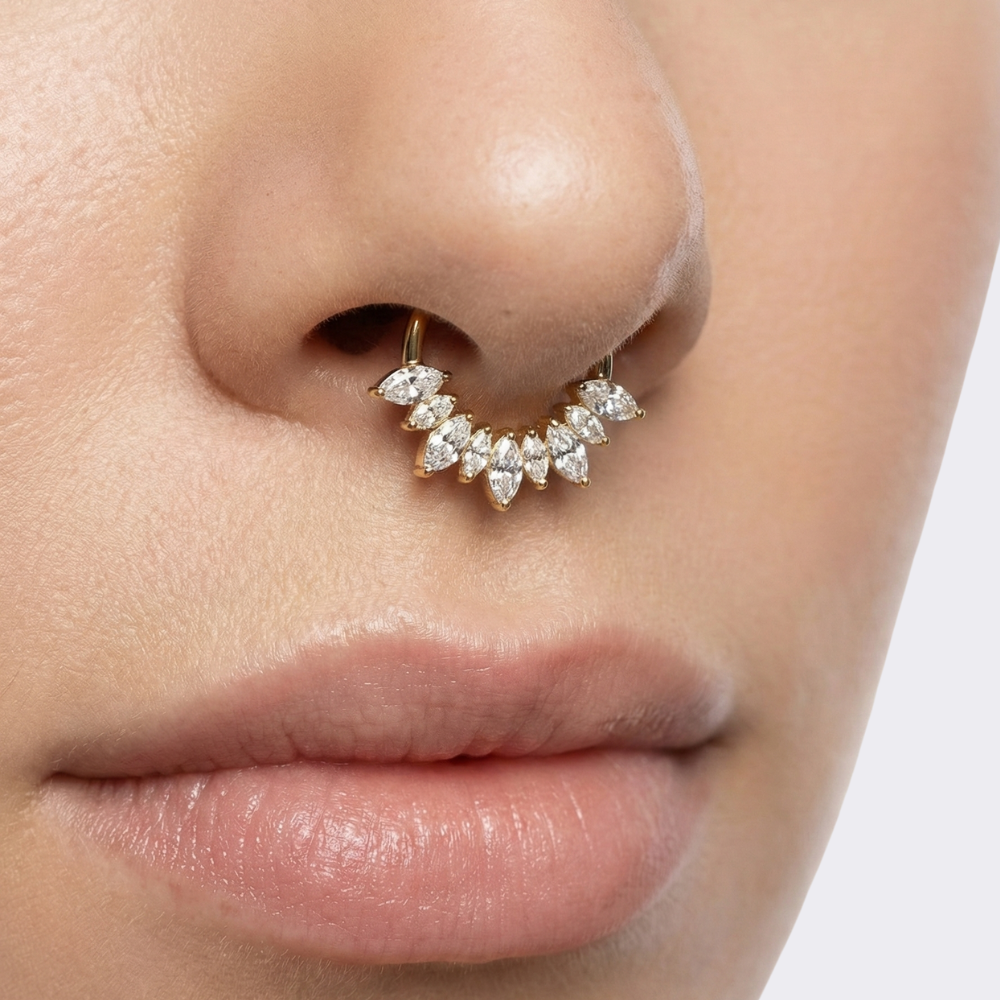
Piercing the so-called the "sweet spot" of the nasal septum - a thin band of tissue between cartilage and bone, not the cartilage itself. Moderate pain, contrary to popular belief, not extreme.

Bridge
A superficial horizontal piercing on the bridge of the nose, between the eyes. It passes through a fold of skin, not deeper tissue or bone. High risk of migration (jewelry shifting) and extrusion due to the superficial nature of the piercing.

Eyebrow (eyebrow piercing)
Surface piercing around the eye. Jewelry passes shallowly through a fold of skin, which makes it more susceptible to migration than piercings through cartilage or deeper tissue.

Labret (lip piercing)
Piercing under the lower lip. One of the most recognizable facial piercings. Due to the close contact with the teeth and gums, a labret with a flat disc on the inside is mandatory to start with, never a ball. When worn for a long time, the ball on the side of the mouth damages the enamel and recedes the gums.

Vertical labret
A vertical piercing through the lip, with two jewelry ends visible. One on the upper edge of the lip, the other in the mouth (not through the entire lip).

Medusa (philtrum)
A single piercing in the groove above the upper lip (philtrum), on the axis of facial symmetry. Like a labret, it requires a labret with a flat inner disc so as not to damage the gums and teeth.

Monroe
A piercing of the upper lip in a place imitating a mole, usually on one side (the name refers to Marilyn Monroe's characteristic mole). Cosmetically similar to the medusa, it differs in its location - on the side, not on the axis of symmetry.

Smiley
Piercing the frenulum of the upper lip (the membrane connecting the lip with the gum). Only visible when smiling. High risk of rejection without proper care, because the frenulum is a thin, movable tissue constantly exposed to friction when talking and eating.

Tongue piercing
It heals surprisingly quickly despite significant swelling in the first days. Effect of good blood supply to the tongue and saliva with antibacterial properties. At the time of piercing, there is a lot of discomfort in the first week due to swelling.


